Choosing faux leather bags for global buyers takes more than judging a product photo. The right choice depends on material consistency, construction, supplier reliability, and the needs of the intended market. In this guide, “Best Fake Bags” refers to legitimate faux leather bags—not counterfeit branded goods.
Details matter. Check the surface for an even finish, then inspect seams, edge paint, lining, zippers, and handle attachment. Ask for a sample before placing a large order. A bag may look polished online yet feel stiff, smell strongly, or show uneven stitching in person. Those small flaws can become costly returns.
For transparency, Maya Chen is a fictional composite sourcing adviser created for this introduction, not a quoted real-world authority. Her practical reminder is: “Choose the bag you can verify, not the one you can only admire.” Buyers can apply that principle by requesting material specifications, clear product photos, quality-control details, and written care guidance. Ask how the finish responds to regular handling, moisture, and storage; performance varies by material and construction. Also confirm that product descriptions accurately identify the materials used. Do not assume every faux leather performs alike. A lighter bag may suit daily commuting, while a structured design may better serve travel or retail display. Compare samples against your target price, expected use, and customer preferences. The process is not perfect; supplier claims still need checking. A careful checklist helps buyers make a more informed decision.
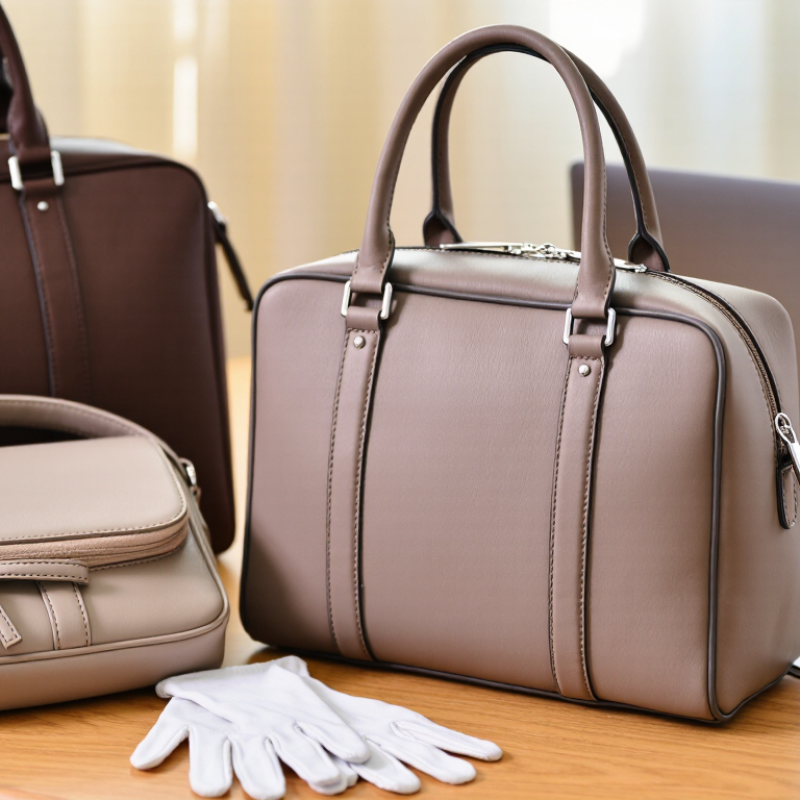
Faux leather is not one material. Most bags use polyurethane (PU) or polyvinyl chloride (PVC) coatings on a textile backing. PU usually feels softer and bends more naturally, while PVC can offer a tougher, wipe-clean surface. Yet finish, coating thickness, and backing fabric can change performance more than the label suggests. Check the inside edge: a neat, even coating and firmly stitched seams are useful signs, though not guarantees.
Bio-based and recycled options need careful reading. “Plant-based” may describe only part of a coating, while recycled content may refer to the backing rather than the full material. Ask suppliers for the percentage, test method, and abrasion or flex-test results.
Grand View Research estimated the global synthetic leather market at USD 33.7 billion in 2023. That figure signals broad demand, not proof that any particular bag is durable or lower-impact. A material name alone is not enough; I would still want sample testing, and that is easy to overlook.
Tips: Compare samples under the same light. Bend each one repeatedly, wipe a small area, and inspect for cracking, color transfer, or peeling. Don’t skip the backing.
Faux leather quality depends on both its surface coating and textile backing. Ask suppliers for material specifications, backing composition, and care instructions. Then inspect the bag in person when possible. Look for an even grain, consistent color, and smooth edges without peeling or bubbling. Bend a panel gently and check whether it creases, cracks, or keeps its shape. Rub a hidden area with a clean, damp cloth to spot possible color transfer. A strong chemical odor may deserve questions, though smell alone cannot confirm material safety. A polished sample can still mislead; bulk production may vary.
Construction determines how well a bag handles daily use. Examine stitching around handles, corners, zippers, and pocket openings. Uneven stitches or loose threads can signal weak assembly. Gently pull the handles and check whether reinforcement spreads the load across the body. Open and close each zipper several times; it should move without snagging. Check that lining seams are secure and interior edges are finished, not left fraying. For shipments across climates, ask how the material responds to heat, humidity, and prolonged storage. Request repeatable inspection criteria and test samples from more than one production batch. Small details matter. No sample guarantees lasting performance.
A useful faux leather bag should fit the buyer’s routine, not just look attractive in a product photo. Commuters often need a secure zip, an adjustable strap, and space for a tablet or water bottle. For shoppers carrying only a phone and wallet, a compact crossbody may feel lighter and easier to use. Small details matter.
Market preferences vary, but avoid assuming every customer in one region wants the same design. In warmer, humid conditions, buyers may value a lighter bag that is easy to wipe clean. In rainy seasons, a covered zip and water-resistant lining can be practical, though faux leather itself is not automatically waterproof. For gift and fashion markets, color and hardware can matter more; for daily retail, neutral shades may be easier to match with work clothes.
Compare samples with the intended use in mind. Check seam consistency, strap attachment points, lining, and how smoothly the zipper moves. A bag can look structured on a shelf yet sag when loaded with a laptop. Looks can deceive. Ask suppliers for material details and care guidance, then test a sample with realistic weight. Even careful checks have limits: color may appear different under shop lighting, and preferences can change between seasons. Choose styles based on buyer feedback, not assumptions alone.
For global buyers, a faux leather bag’s safety file should match its actual materials, not just its product description. Ask suppliers to identify whether the coating is polyurethane or PVC and list dyes, adhesives, linings, and metal fittings. Then check destination-market rules for restricted chemicals, such as certain phthalates, azo colorants, or nickel release. Requirements differ by country and product use. Children’s products may face additional limits.
Small details matter. The European Commission’s 2023 Safety Gate report recorded 3,412 consumer-product alerts; chemical risks represented 32%. These figures cover many product categories, not bags alone, but they show why chemical checks deserve attention. Request test reports from a qualified laboratory for the relevant material, color, and production batch. A report for a similar-looking sample may not cover a changed coating. I would not treat a supplier declaration as a substitute for testing; it is useful evidence, but it can be incomplete.
Before shipment, confirm the correct tariff classification, country-of-origin marking, labeling, and customs documents for the destination. Keep the bill of materials, test results, and supplier declarations together. Import rules can change, and a checklist can miss something. Verify current requirements with the destination authority or a qualified customs professional.
How to Choose the Best Faux Leather Bags for Global Buyers?
Supplier choice starts with comparable samples, not polished catalog photos. Grand View Research valued the global synthetic leather market at US$31.73 billion in 2023 and forecasts 7.4% annual growth from 2024 to 2030. That signals a broadening supplier base, but not uniform quality. Request the same bag panel from each factory, then compare thickness, backing fabric, surface feel, stitching, and abrasion-test results. Ask for test reports tied to the exact material code. A generic certificate proves little about your chosen finish.
Price comparisons need the same terms. Check whether quotes include samples, packaging, testing, tooling, and freight; confirm minimum order quantities and repeat-order lead times. Textile Exchange’s Materials Market Report 2024 estimates that polyester made up 57% of global fiber production in 2023. Since polyester may be used as faux-leather backing, ask suppliers to disclose backing composition and provide supporting documentation. Cheap is not simple. A low unit price can conceal a high color minimum or costly custom hardware.
Customization works best when each change is priced separately. Request color swatches under daylight and indoor lighting, plus a pre-production sample with the final lining, zipper, and logo placement. Specify acceptable shade variation and surface texture in writing. One imperfect reality: a soft sample may feel stiff after production-scale coating, so approve a production-line sample when possible. Ask how rejected pieces are handled, and who pays for corrections. A supplier’s clear answers here can matter more than a small discount.
The figures below are indicative sourcing ranges for common PU/PVC faux leather bags, not live quotations. Actual prices and minimum order quantities vary by bag design, material specification, order volume, testing requirements, and trade terms. Confirm details directly with shortlisted suppliers.
| Supplier Region | Common Supplier Profile | Typical MOQ per Style | Indicative FOB Price per Bag (USD) | Customization Options | Typical Production Lead Time | Points to Check |
|---|---|---|---|---|---|---|
| China | Broad supplier base, from small workshops to export-oriented factories; extensive accessory and material sourcing options. | About 100–500 pieces | About $4–$20 | Often offers custom colors, linings, hardware, labels, packaging, and private-label designs; sample and mold fees may apply. | About 30–60 days after sample approval | Confirm material composition, hardware quality, color consistency, and whether quoted prices include custom packaging. |
| India | A varied mix of bag manufacturers and export businesses; capabilities and factory scale can differ considerably by supplier. | About 100–500 pieces | About $5–$22 | Common options include custom dimensions, colors, printed or woven labels, lining, and selected hardware finishes. | About 35–65 days after sample approval | Ask for a production sample and written quality tolerances; check material availability and export packing details. |
| Vietnam | Manufacturing base with export-focused factories; some suppliers may prioritize larger or repeat orders. | About 300–1,000 pieces | About $6–$24 | Custom colors, dimensions, labels, and packaging may be available, subject to order quantity and material sourcing. | About 40–70 days after sample approval | Verify that the supplier makes the bag in-house or clearly discloses subcontracting and production locations. |
| Turkey | Suppliers may suit buyers seeking shorter transit to nearby European markets; individual factory capacity varies. | About 100–500 pieces | About $8–$30 | Design, color, trims, labels, and packaging can often be discussed; confirm availability for each specific material and order size. | About 25–55 days after sample approval | Compare total landed cost, not just unit price; check shipping terms, capacity, and any applicable import requirements. |
| Bangladesh | Export-oriented manufacturing sector; confirm that a prospective factory has relevant experience with the specific bag construction. | About 300–1,000 pieces | About $5–$20 | Custom specifications and branding may be possible; options depend on supplier capability, material sourcing, and order volume. | About 40–70 days after sample approval | Request evidence of relevant bag-making experience, a signed specification sheet, and a confirmed production schedule. |
| What to Compare | What to Request or Confirm |
|---|---|
| Material specification | Ask whether the material is PU, PVC, or another composition, and specify thickness, backing, texture, and color reference. |
| Sample and quality control | Approve a production-representative sample and define inspection criteria for dimensions, stitching, hardware, color, and defects. |
| Price and trade terms | Compare like-for-like quotations, including order quantity, packaging, sample fees, Incoterm, freight, duties, and payment terms. |
| Compliance and claims | Identify the destination-market requirements and request relevant test reports or documentation; verify any environmental or material claims independently. |
| Customization and timing | Confirm which changes affect MOQ, price, sampling, and lead time, and obtain a written production and shipment schedule. |
PU usually feels softer and bends more naturally. PVC can provide a tougher, wipe-clean surface. Coating thickness and backing also affect performance.
Not necessarily. Those terms may apply only to part of the coating or backing. Ask for percentages, test methods, and supporting documents. Labels can mislead.
Look for even color, smooth edges, and no bubbling or peeling. Bend the panel and wipe a hidden area with a damp cloth. Check for cracks or color transfer.
Inspect stitching around handles, corners, zippers, and pockets. Pull the handles gently to see whether reinforcement spreads the load. Small details matter.
Ask for reports tied to the exact material code and finish. Compare samples under the same lighting, and request repeatable inspection criteria. A sample is not a guarantee.
Check whether quotes include samples, packaging, testing, tooling, and freight. Confirm minimum order quantities and repeat-order lead times. Cheap is not simple.
Price each change separately. Review color swatches in daylight and indoor lighting, then approve a sample with the final lining and zipper. Shade variation needs written limits.
Yes. A soft sample may feel stiffer after larger-scale coating. Ask for a production-line sample when possible, and clarify who handles rejected pieces. I would not skip that check.
Choosing the Best Fake Bags for global buyers starts with understanding the differences between faux leather materials, such as polyurethane and PVC, including their feel, care needs, and expected lifespan. Evaluate material consistency, stitching, seams, hardware, lining, and overall construction to judge durability and suitability for frequent use. Consider how bag styles, sizes, colors, and practical features match the preferences and everyday needs of buyers in different markets.
Before placing an order, review relevant product safety information, certifications, labeling, and import requirements for the intended destination. Compare suppliers by assessing sample quality, production capacity, communication, pricing, lead times, and customization options. Request clear specifications and confirm what is included in each quote, so expectations are aligned. A thoughtful comparison helps buyers select faux leather bags that balance appearance, function, quality, and value.

ManMa Bags