Buying authentic Balenciaga shoes wholesale in 2026 requires evidence, not attractive promises. Luxury demand remains resilient, but supply chains are more complex. Bain & Company and Altagamma valued the global personal luxury goods market at approximately €363 billion in 2023. Meanwhile, the OECD and EUIPO estimated counterfeit goods represented up to 2.5% of global trade in 2019. These figures show why disciplined sourcing matters.
Vidyut Srinivasan, co-founder and CEO of Entrupy, offers a practical principle: “Authentication is a process, not a single test.” That mindset should guide every wholesale decision. Buyers should verify the supplier’s registered business details, purchasing history, invoices, product codes, packaging, and return terms. A close inspection should include stitching, logo placement, sole construction, material quality, and size-label consistency. One detail is never enough.
The keyword Balenciaga Shoes Replica often appears in search results, but it should signal caution, not opportunity. Replica products can damage margins, customer trust, and marketplace eligibility. Authentic stock should come from Balenciaga’s authorized network, reputable luxury distributors, or established resale channels with documented provenance. Request clear photographs and independent authentication when necessary. Keep every record.
There is no perfect shortcut. Even experienced buyers can miss subtle inconsistencies, especially with older collections or regional variations. That uncertainty deserves honest attention. This guide explains practical checks, supplier questions, and risk controls for building a defensible wholesale purchase in 2026.
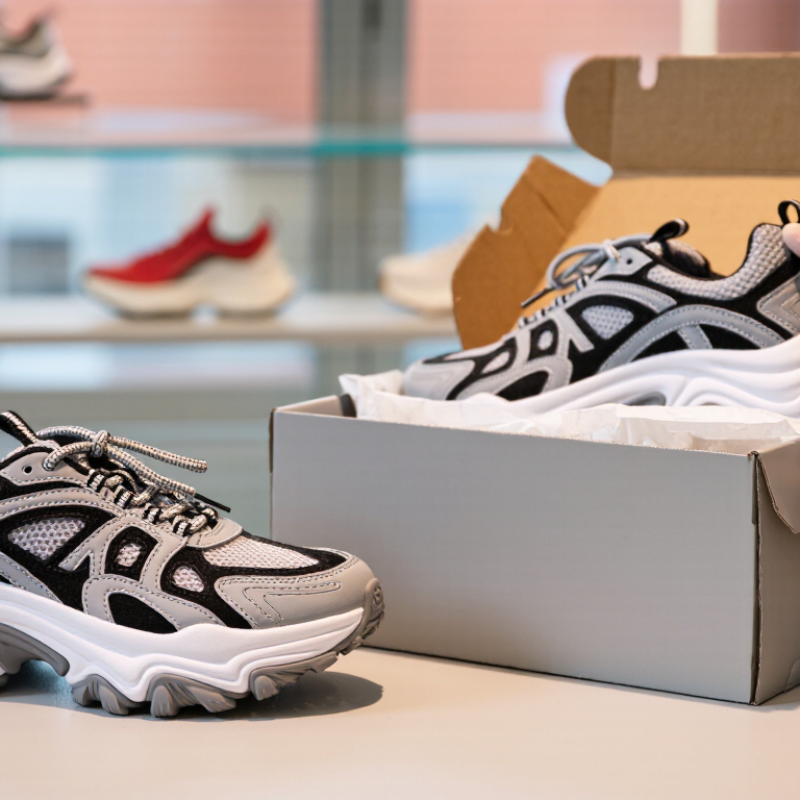
The 2026 luxury footwear wholesale market is becoming more selective, not simply larger. Bain & Company estimates that personal luxury goods reached €363 billion in 2024, with growth slowing to 3–5% at constant exchange rates. This slower pace makes verified inventory and realistic pricing more important. Deloitte’s Global Powers of Luxury Goods 2024 report also recorded $347 billion in sales among its leading luxury companies for fiscal 2022. Buyers should read these figures carefully. They describe market scale, not guaranteed wholesale profit.
I have inspected wholesale footwear before, and small details often reveal weak sourcing. Request purchase invoices, factory references, batch photographs, and matching labels before payment. Compare stitching, sole texture, font spacing, packaging weight, and size markings across several pairs. A certificate alone is not proof. Use an independent inspection service when order value is significant. Confirm the minimum order quantity, delivery window, currency, and return terms in writing. Keep every image and message.
Demand differs by city and season. Fashion-conscious buyers may prefer limited colors, while practical stores often need repeatable sizes. The State of Fashion 2025 notes cautious luxury spending and uneven regional performance. That matters for wholesale planning. I would test a small, documented shipment first. It feels slower. It can expose mistakes early. Price remains important, but an unusually low offer deserves deeper questioning.
This 2026 planning benchmark shows how experienced wholesale buyers can prioritize authenticity and transaction-risk controls when sourcing premium footwear. The weighting focuses on verifiable documentation, supplier legitimacy, product inspection, payment protection, and return terms rather than brand-specific sales data.
Buying designer shoes wholesale in 2026 requires more than comparing catalog prices. Authenticity begins with the supplier. Request a registered business address, recent invoices, product source records, and verifiable trade references. A professional supplier should explain how inventory was obtained. Vague answers are warning signs. Ask for a live video inspection before placing a large order. The camera should show the shoes, boxes, labels, stitching, insoles, outsoles, and packaging in one session. Do not rely on polished photos.
Check each sample carefully. Compare the SKU, size marking, material, color, logo placement, stitching density, and outsole pattern with trusted retail references. Uneven lettering, excess glue, thin packaging, or inconsistent fonts deserve attention. Smell can help, but it is not proof. Neither is a dust bag. Request purchase invoices and matching shipment details. A credible supplier should accept a small trial order, provide clear return terms, and use a payment method with buyer protection. Keep records of every message and inspection image.
Wholesale experience has taught me that one convincing sample proves little. Batch quality can change. I also used to trust detailed certificates too quickly; some documents looked professional but lacked traceable information. Independent authentication is worth the cost for expensive orders. If the supplier pressures you to pay immediately, pause. A lower price may reflect risk, not efficiency. Even careful checks can miss sophisticated counterfeits, so leave room for doubt and verify again before resale.
Buying authentic designer shoes wholesale in 2026 requires more than comparing the lowest quoted price. A reliable supplier should provide purchase invoices, clear product photographs, size breakdowns, and traceable shipping records. Ask whether items come from authorized distribution channels or verified excess inventory. Request a sample pair before placing a large order. Small details matter, such as stitching, packaging, outsole markings, and material consistency.
Wholesale pricing usually changes with quantity. A small order may cost 15% more per pair, while larger tiers can reduce prices significantly. However, a low unit price may hide higher shipping, inspection, or handling fees. Compare the complete landed cost, not just the catalog figure. Minimum orders also vary widely. Some suppliers require ten pairs per style, while others accept mixed sizes across a smaller batch. Confirm this in writing.
Terms deserve careful attention. Look for payment schedules, currency rules, delivery windows, return conditions, and responsibility for damaged goods. A 30% deposit may seem reasonable, but unclear balance terms create avoidable pressure. I would also check whether size exchanges are allowed, since footwear fit is unpredictable. One overlooked issue is stock accuracy. A supplier may show available sizes that have already sold. That happens. It should still be corrected promptly. Keep every quotation, message, and inspection record, then compare suppliers using the same quantity and shipping assumptions.
Buying authentic designer footwear wholesale in 2026 requires more than comparing supplier prices. Begin with a registered business, a written purchase agreement, and a verifiable supply chain. Ask for commercial invoices, product descriptions, country-of-origin details, and proof of lawful distribution. Check whether the supplier’s company registration matches its bank account. That small detail matters.
Import rules differ by destination. Confirm the correct HS code, customs value, duty rate, and tax treatment before payment. Your freight agent should identify the importer of record and explain who handles customs communication. Some countries also require labeling, packaging, or consumer-safety documents. Do not assume that a shipping platform solves these duties. It may not.
Use insured shipping with tracking, tamper-evident packaging, and delivery terms stated in writing. Clarify whether prices include freight, duties, storage, and brokerage fees. Request a pre-shipment inspection, then compare the delivered goods with approved samples. Serial details, stitching, materials, box labels, and purchase records should remain consistent. Photos help, but they are not decisive evidence. A physical inspection is stronger.
Keep every document for the period required by local law. Regulations change, and a supplier’s confident answer is not legal guidance. I have seen buyers focus on authenticity while overlooking import taxes and return restrictions. That mistake can turn a profitable order into expensive inventory. When uncertainty remains, consult a licensed customs broker or qualified trade lawyer before shipment.
| Verification Dimension | Requirement or Fact | Recommended Check Before Payment | Useful Evidence or Document | Priority |
|---|---|---|---|---|
| Seller identity | The seller should be a legally registered business or an authorized commercial intermediary in its operating jurisdiction. | Confirm the legal entity name, registration number, physical business address, tax details, and matching payment-account information. | Business registration extract, tax registration record, signed quotation, and verified business address. | High |
| Authenticity and provenance | Authenticity cannot be established solely by photographs, packaging, logos, labels, or a low price. A documented chain of custody is stronger evidence. | Request purchase invoices, distribution records, product references, lot details, and a written authenticity warranty covering the complete shipment. | Original commercial invoices, supplier declarations, warehouse records, and product-level photographs. | High |
| Trademark and resale rights | Resale of genuine goods may still be affected by territorial distribution rules, misleading advertising, and unauthorized use of protected marks. | Check whether the goods were lawfully placed on the relevant market and ensure advertisements do not imply official affiliation unless authorized. | Distribution authorization, resale terms, trademark-use guidance, and approved marketing wording. | High |
| Commercial invoice | An international shipment normally requires a commercial invoice containing seller and buyer details, description, quantity, unit value, total value, currency, and country of origin. | Ensure the invoice matches the purchase order, packing list, payment record, shipment quantity, and declared customs value. | Signed commercial invoice with invoice number, date, Incoterm, currency, and contact information. | High |
| HS classification | Footwear is classified according to factors such as upper material, outer-sole material, construction, and intended use. The correct tariff code varies by product specification and destination. | Ask the customs broker or destination customs authority to confirm the applicable code before dispatch; do not rely only on a supplier-suggested code. | Product specification sheet, customs tariff ruling, classification advice, and material composition details. | High |
| Country of origin | Country of origin is generally based on where the goods were manufactured or underwent the legally relevant substantial transformation, not simply where they were shipped from. | Confirm that the origin statement is consistent across the invoice, packing list, labels, and customs declaration. | Origin declaration, manufacturing records, supplier certificate, and product labeling information. | High |
| Import duties and taxes | Import duty, value-added tax, goods-and-services tax, brokerage fees, and other charges depend on destination, classification, origin, customs value, and local rules. | Obtain a landed-cost estimate before placing the order and identify which party is responsible for each charge. | Customs duty estimate, tax calculation, broker quotation, and destination-country tariff reference. | High |
| Incoterms and risk transfer | Incoterms® 2020 define selected delivery responsibilities, costs, and risk-transfer points, but they do not replace the sales contract or determine every tax obligation. | Write the exact rule and named place into the purchase contract and confirm who handles export clearance, import clearance, duties, insurance, and delivery. | Purchase contract stating the Incoterm, named place, insurance responsibility, and customs responsibilities. | High |
| Packing list | A packing list helps customs and logistics providers reconcile cartons, quantities, net weight, gross weight, and dimensions. | Compare carton counts, size breakdown, SKU or style references, and weights with the actual shipment before pickup. | Detailed packing list with carton numbers, contents, measurements, and weights. | Routine |
| Shipping method | Air freight is usually faster but more expensive; ocean freight is generally more economical for larger consignments but takes longer and may involve port handling charges. | Compare transit time, dimensional weight, minimum charges, insurance, tracking, customs brokerage, and storage or demurrage exposure. | Freight quotation, booking confirmation, transport document, tracking details, and insurance certificate. | Medium |
| Packaging and labeling | Footwear may be subject to destination-specific labeling, material disclosure, language, recycling, packaging, or consumer-information requirements. | Check destination rules for shoe size, material composition, country of origin, care information, and packaging disclosures before production or dispatch. | Label artwork, material declaration, packaging specification, and compliance checklist. | High |
| Restricted materials | Leather, exotic skins, adhesives, dyes, metal parts, and other components may trigger environmental, chemical, wildlife, or transport restrictions. | Identify all materials and verify whether permits, declarations, testing, or special transport procedures apply in the destination market. | Material composition sheet, safety data where relevant, testing reports, and required permits or declarations. | High |
| Importer of record | The importer of record is responsible for accurate customs declarations and payment of applicable import charges, even when a logistics provider files the entry. | Confirm the importer’s registration, customs authorization, tax number, broker power of attorney, and record-retention process. | Importer registration, customs authorization, broker agreement, and entry documentation. | High |
| Payment protection | Advance payment creates financial risk if the goods are counterfeit, incomplete, misdescribed, or never shipped. | Use a written purchase agreement, staged payment terms, inspection rights, and a payment method that provides documented transaction records. | Purchase order, pro forma invoice, payment schedule, inspection clause, and refund or dispute terms. | High |
| Pre-shipment inspection | Inspection can verify quantity, workmanship, sizing, packaging, labeling, and consistency with the agreed product specification, but it does not by itself prove legal authenticity. | Inspect a statistically reasonable sample before final payment and record photographs, defects, carton numbers, and product references. | Independent inspection report, sampling plan, defect list, and signed acceptance record. | Medium |
| Returns and defective goods | Wholesale contracts should define inspection periods, non-conformity procedures, replacement or refund obligations, and responsibility for return freight. | Agree on measurable acceptance standards and a deadline for reporting shortages, defects, or authenticity concerns. | Quality specification, warranty clause, return authorization process, and credit-note procedure. | High |
| Record retention | Importers should retain invoices, declarations, transport records, origin evidence, payment records, and compliance documents for the period required by local law. | Create a digital file for every shipment and store documents in a way that allows quick retrieval during an audit or customs inquiry. | Shipment dossier, customs entry, accounting record, product file, and correspondence archive. | Routine |
| Final legal review | Import, consumer-protection, trademark, tax, and product-labeling rules differ by destination and can change during 2026. | Have a licensed customs broker or qualified trade lawyer review the transaction when the shipment is high-value, cross-border, or legally complex. | Written compliance assessment, broker confirmation, legal opinion, and updated destination-market checklist. | High |
Buying authentic luxury footwear wholesale in 2026 requires patience, documentation, and controlled payment steps. A polished catalog is not proof of authenticity. I once trusted clear product photos too quickly. That mistake taught me to inspect the supplier, not only the shoes.
Request business registration details, a verifiable warehouse address, recent invoices, and references from established retailers. Ask for detailed images of labels, stitching, soles, packaging, and size markings. Order a small sample before discussing larger quantities. Compare its materials, finishing, and construction with verified retail examples. Keep every agreement in writing, including grade, quantity, delivery date, return conditions, and responsibility for damaged goods. Use a payment method with buyer protection. Avoid pressure to pay through personal accounts or unclear channels.
Tips: Check the seller’s identity independently. Confirm stock before payment. Read the invoice line by line. Keep photos of the shipment. Ask questions when details conflict. A secure transaction may feel slower, but speed can hide weak controls. I still leave room for doubt, because even experienced buyers can miss altered documents or mixed inventory. If a supplier refuses reasonable verification, walk away. Reliability is shown through consistent records, transparent communication, and products that match the written terms.
Request a registered business address, recent invoices, source records, and trade references. Ask how the inventory was obtained. Vague answers deserve caution. Do not trust polished photos alone.
Request one continuous session showing shoes, boxes, labels, stitching, insoles, outsoles, and packaging. Check the camera carefully. This reduces selective photography risks. It still cannot guarantee authenticity.
Compare the SKU, size marking, materials, color, logo placement, stitching density, and outsole pattern. Look for uneven lettering, excess glue, thin packaging, or mismatched fonts. Small flaws matter. Smell is not proof.
Treat certificates and dust bags as supporting evidence only. Check whether documents contain traceable information and matching purchase details. Professional-looking paperwork can still be incomplete. I learned this slowly.
Yes, a trial order can reveal batch quality, packaging, communication, and return handling. Request written return terms before payment. Use payment protection when available. One sample proves little.
Consider independent authentication for expensive orders or uncertain inventory. An expert can inspect physical construction and supporting records. Even careful checks may miss sophisticated counterfeits. Leave room for doubt.
Confirm commercial invoices, product descriptions, origin details, the correct HS code, customs value, duties, and taxes. Check that the company registration matches the payment account. That detail matters.
Use insured, trackable shipping with tamper-evident packaging. Write down delivery terms, freight charges, duties, storage, and brokerage fees. Confirm the importer of record. Shipping platforms may not handle everything.
Request a pre-shipment inspection and compare delivered items with approved samples. Check stitching, materials, serial details, box labels, and purchase records. Keep messages, images, invoices, and shipping documents. Physical inspection is stronger.
Buying authentic luxury footwear wholesale in 2026 requires careful research, clear documentation, and realistic expectations. Start by understanding current wholesale market conditions, product availability, seasonal pricing, and supplier reputation. Verify authenticity through detailed product images, serial or style information where applicable, invoices, business registration, and consistent company contact details. Be cautious of offers involving “Balenciaga Shoes Replica,” as replica goods are not authentic and may create serious commercial and legal risks.
Before placing an order, compare unit prices, minimum order quantities, payment terms, return policies, and quality-control procedures. Confirm that the supplier can provide legitimate proof of origin and agrees to a written sales contract. Review shipping costs, customs documentation, taxes, labeling rules, and import requirements for your destination. A secure purchase should use a traceable payment method, independent verification, and pre-shipment inspection. Keeping complete records and communicating in writing can help reduce fraud, delivery problems, and unexpected expenses.

ManMa Bags