How to Spot Fake Bogg Bags Before Global Wholesale Purchase?

Time:2026-10-21 Author:Sophia
0%

Global wholesale buyers face a costly question: how can they identify Fake Bogg Bags before placing a large order? A polished product photo is not enough. Counterfeit-looking stock may copy the familiar shape, bright colors, and wide handles, yet fail under close inspection.

David J. Maher, a recognized brand-protection specialist, offers a useful principle: “Authenticity is a process, not a glance.” This idea guides the checks in this article. Buyers should examine stitching, logo placement, material thickness, drainage holes, packaging details, and product consistency. Ask for clear factory images. Request a traceable commercial invoice. Compare several samples, not just one.

Small clues matter.

A genuine bag should feel sturdy, balanced, and carefully finished. Uneven seams, sharp plastic edges, strange odors, blurred logos, or inconsistent colors deserve attention. Supplier claims also need testing. A confident message does not replace verifiable sourcing.

The process is not perfect. Packaging can change. Legitimate production batches may show minor differences. That uncertainty makes careful documentation important. Record photos, model details, quantities, and seller statements before approval. Independent inspection may also reveal issues that a rushed internal check misses.

This introduction prepares wholesale purchasers to assess Fake Bogg Bags with practical judgment. It does not promise instant certainty. Instead, it encourages slower decisions, stronger evidence, and honest questions before global purchasing commitments are made.
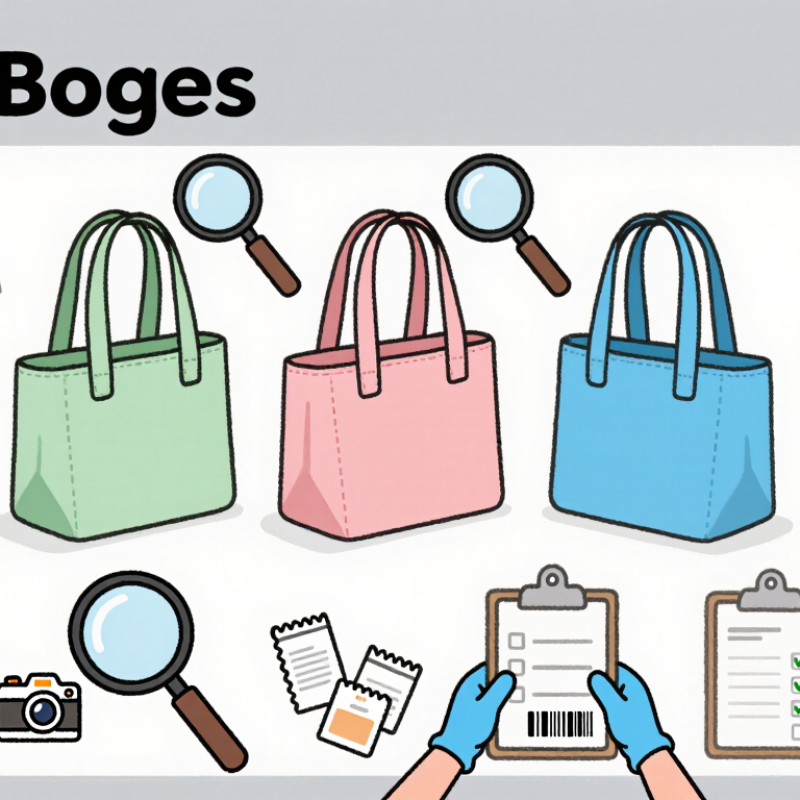
How to Spot Fake Bogg Bags Before Global Wholesale Purchase?

Brand Marks and Product Details That Define Genuine Bogg Bags

Before a global wholesale purchase, inspect the brand marks under bright, neutral light. Genuine molded tote bags usually show clean, even lettering, consistent spacing, and sharply defined logos. The mark should sit at the same height across samples. Blurred edges, uneven depth, or mismatched fonts deserve investigation. Packaging labels should also match the product’s color, size, and material description. Small errors matter.

Product details can reveal more than a logo. Check the bag’s weight, flexibility, hole pattern, handle alignment, and base stability. The material should feel firm but not brittle. Drainage holes should be smooth, without sharp plastic fragments. Accessories must fit correctly and use consistent finishes. Request several production samples, not one ideal piece. A single sample can hide batch variation. My checklist is useful, but it is not perfect.

The OECD and EUIPO reported that counterfeit goods represented about 2.5% of global trade, worth approximately 464 billion US dollars in 2019. That figure supports stricter sampling and supplier verification. GS1 traceability guidance also stresses consistent product data and unique identification. Compare carton codes, invoices, labels, and physical measurements before approving volume. Keep dated photographs and written inspection records. A low price is not proof of fraud, but unexplained differences should pause the order.

Materials, Construction, and Craftsmanship Checks for Authenticity

Before a global wholesale purchase, inspect the material rather than trusting logos or packaging. Genuine molded totes usually show consistent polymer density, clean edges, and a mild, uniform surface finish. Press the base and sidewalls. They should recover without sharp whitening or permanent creases. Examine several units from different cartons. One perfect sample proves little.

The OECD and EUIPO estimated that counterfeit goods represented up to 2.5% of global trade in 2019, worth about $464 billion.

That risk makes batch testing practical, not excessive. Request the polymer specification, production lot, and independent test records.

Compare hardness, tensile strength, and color across samples. ASTM D2240 supports hardness testing, while ASTM D638 measures tensile properties. ISO 2859-1 can guide acceptance sampling for larger orders.

Small details matter. Inspect drainage holes, handle joints, weld lines, and accessory attachment points. Uneven hole spacing may indicate rushed molding. Weak seams often reveal poor cooling or recycled material inconsistency.

Textile Exchange reported global fiber production reached 124 million tonnes in 2023, showing how complex material supply chains can become. Documentation still needs physical verification.

I have seen attractive samples fail after repeated bending. My inspection can miss hidden defects, too. Use third-party testing when the order value is high.

Packaging, Labels, and Accessories to Examine Before Buying

How to Spot Fake Bogg Bags Before Global Wholesale Purchase?

Packaging, labels, and accessories often reveal quality problems before a shipment arrives. During wholesale inspections, I check the carton before opening the product. Weak cardboard, blurred printing, uneven colors, or missing handling marks deserve attention. Genuine commercial packaging usually looks deliberate, not rushed.

Check the product label closely. The font should remain sharp at normal reading distance. Spelling errors, inconsistent spacing, and peeling adhesive suggest poor control. Compare several units from the same sample batch. Serial markings, material descriptions, and care information should match across every item. However, a clean label does not prove authenticity. Counterfeit suppliers can copy printed details surprisingly well.

Look at the accessories, too. Closures should fit firmly and operate smoothly. Straps, inserts, buttons, and protective films should appear consistent in color and finish. Loose parts inside the carton may indicate careless assembly or repackaging. Photograph each detail, including carton edges and inner wrapping, before approving a bulk order. Keep the sample beside later production units for comparison. Small differences matter.

Do not rely on one clue.

A supplier’s confident explanation is not evidence by itself. Ask for clear product photographs, packaging specifications, and a physical sample before committing to volume. I have sometimes judged a package too quickly, then noticed that lighting affected the color. That mistake is worth remembering. Use several checks, record findings, and pause when the packaging story does not match the product.

How to Spot Fake Bags Before Global Wholesale Purchase

Recommended pre-purchase evidence points for packaging, labels, accessories, and product construction

Request clear photos or inspection records for every point before placing a wholesale order. Compare packaging print quality and sealing, verify label consistency and traceability, count and test included accessories, and inspect construction details such as holes, handles, welds, and the base. Missing, inconsistent, or poorly finished evidence should trigger further verification.

Supplier Verification and Sample Testing for Wholesale Orders

Before any global wholesale purchase, verify the supplier beyond a polished website. Request a registered business name, factory or warehouse address, export history, and two recent trade references. Check whether these details remain consistent across invoices, email signatures, and payment documents. A serious supplier usually answers specific questions clearly. Vague replies are warning signs. So are changing bank details.

Ask for product specifications before ordering samples. Confirm material type, dimensions, stitching method, handle strength, packaging, and acceptable defect limits. Then order samples from the same production channel proposed for bulk supply. Inspect them under bright light. Check edge finishing, seam spacing, lining, fasteners, labels, and weight. Measure each sample against the written specification. Small differences matter.

Use photos, a short inspection video, or an independent quality service. Record every defect with close-up images and measurements. A sample may look excellent while hiding weak handles or uneven panels. Test the bag with a reasonable load, but avoid damaging it deliberately. No checklist is perfect. My own process still misses details when rushed. That is why a second reviewer should inspect the sample. Approve the order only after written confirmation of the final specifications, inspection process, replacement terms, and traceable payment records.

How to Spot Fake Bogg Bags Before Global Wholesale Purchase? - Supplier Verification and Sample Testing for Wholesale Orders

Verification Dimension Evidence or Test Method Recommended Sample Size Acceptance Criteria High-Risk Warning Signs Wholesale Decision
Supplier identity Verify the registered legal entity, business address, tax or registration document, payment beneficiary, and company-domain email. 1 complete document set Names, addresses, bank details, and invoices are consistent across all documents. Personal bank account, recently changed payment details, unverifiable address, or refusal to provide documents. Hold order until independently verified.
Authorization and supply rights Request written proof of authorization or a documented supply chain for any branded or protected design. 1 current authorization record Document identifies the supplier, product category, territory, validity period, and issuing party. “Factory surplus” claims without records, mismatched names, or documents with no validity dates. Do not list products before rights are confirmed.
Product specification match Compare the approved quotation, photographs, dimensions, materials, colors, accessories, packaging, and country-of-origin details with the received sample. 3 samples from separate cartons No unapproved changes to construction, material, color, accessories, labels, or packaging. Different mold details, inconsistent dimensions, missing accessories, or altered labels. Reject or re-approve the specification.
Material composition Review the material declaration and use laboratory identification testing such as FTIR when the polymer type is disputed. 2 product samples plus 1 retained reference sample Declared polymer and additives are consistent with the approved specification and test report. Unexplained odor, brittle material, excessive surface residue, or a composition report unrelated to the shipment. Request laboratory confirmation before bulk purchase.
Color and surface finish Use a controlled-light visual comparison against the approved golden sample; measure color instrumentally when color tolerance is commercially critical. 5 units from different cartons No visible color mismatch, sink marks, flash, cracks, warping, contamination, or uneven finish under normal retail lighting. Gloss variation, sharp mold flash, visible repairs, staining, or color differences between supposedly identical units. Quarantine nonconforming cartons.
Dimensions and weight Measure length, width, height, opening size, and unit weight using calibrated tools; compare results with the approved specification. 10 units Results remain within the buyer’s approved tolerance; use a written tolerance rather than an informal verbal agreement. Large unexplained variation, lower material weight, reduced wall thickness, or dimensions that affect fit and use. Open a corrective-action case if tolerance is exceeded.
Handle, strap, and attachment strength Perform a controlled static-load test using the buyer’s intended load and duration; inspect attachment points before and after testing. 5 units No detachment, cracking, permanent deformation, or functional loss at the buyer-approved load and test duration. Loose attachment points, sharp edges, cracking sounds, strap distortion, or failure during repeated handling. Fail safety review if any critical attachment breaks.
Odor and chemical screening Conduct a documented odor check after unpacking and commission an accredited laboratory test for restricted substances required by the destination market. 3 units for screening; 1 composite or targeted lab sample as applicable No abnormal persistent odor; laboratory results comply with applicable destination-market limits. Strong solvent or plasticizer odor, oily residue, skin irritation, or reports using an unrelated product description. Stop shipment until compliance is documented.
Packaging and traceability Check carton markings, SKU or purchase-order references, production date or lot code, quantity, country of origin, and packaging integrity. 10 cartons or the full sample shipment, whichever is smaller Every carton is traceable to the purchase order and production lot; quantities match packing documents. Mixed cartons, missing lot information, reused packaging, incorrect quantities, or inconsistent carton labels. Require re-packing or full inspection before release.
Documentation authenticity Contact the issuing laboratory or inspection body through independently obtained contact details and confirm report number, date, product description, and sample information. 100% of critical certificates and reports Issuer confirms the document and the tested product description matches the purchase order. Blurry logos, edited PDFs, invalid report numbers, generic product descriptions, or unverifiable contact information. Treat as unverified until independently confirmed.
Pre-shipment inspection Use an independent inspection agency or trained internal inspector to compare finished goods with the approved sample and purchase-order requirements. AQL plan defined in the purchase contract Inspection passes the agreed sampling plan, with zero unresolved critical defects and documented treatment of major and minor defects. Supplier refuses inspection, changes the inspection date repeatedly, or presents only hand-picked units. Do not authorize final payment until inspection is passed.
Commercial risk controls Use a written purchase order covering specification, inspection rights, defect remedies, delivery terms, payment milestones, and document requirements. 1 signed purchase order and 1 approved golden sample Payment is linked to verification milestones; replacement, refund, and rejection terms are clearly stated. Full prepayment pressure, no written remedy, refusal to sign specifications, or price far below comparable quotations. Reduce exposure or discontinue the supplier.
Decision rule: Approve a wholesale order only when supplier identity, supply rights, product conformity, safety documentation, traceability, and independent inspection results are all documented and consistent.

Pricing, Documentation, and Risk Signals in Global Purchases

A low price can attract global wholesale buyers, but it may hide quality or supply risks. Compare the quotation with several verified market offers. A price far below the normal range deserves careful questioning. Ask for a detailed commercial invoice, packing list, material description, and production address. The seller’s company name should match across every document. Small inconsistencies matter.

Request recent product photos, carton markings, and a short factory video. Check stitching, drainage holes, handles, color consistency, and packaging details against an approved sample. Reliable suppliers usually explain their inspection process clearly. They should also provide a written sample approval record and realistic production timeline. Avoid rushed payment requests or sudden bank-account changes. A polished document is not proof. It can still be incomplete.

Tips: Start with a small sample order. Keep every quotation and message. Ask who performed the inspection. Confirm carton quantities before shipment. Use payment terms that match agreed milestones. I have learned that confident sellers can still overlook details. Buyers can too. Recheck names, quantities, and dates before approval. Also, do not rely on one signal; several weak warnings together deserve a pause.

FAQS

How can I inspect product markings before a wholesale purchase?

Use bright, neutral light. Genuine-looking markings should have clean lettering, even spacing, and sharp edges. Check several bags, not one sample. Blurred logos or uneven depth need investigation.

What physical details should I examine on molded tote bags?

Check weight, flexibility, hole spacing, handle alignment, and base stability. The material should feel firm, not brittle. Drainage holes should feel smooth. No sharp fragments.

Why should I inspect samples from several cartons?

One attractive sample can hide batch variation. Request samples from different cartons or production lots. Compare color, weight, dimensions, and surface finish. I sometimes trust the best sample too quickly.

How can material quality be tested practically?

Press the base and sidewalls gently. They should recover without whitening or permanent creases. Compare hardness, tensile strength, and color between samples. Repeated bending may reveal hidden weakness.

What supplier information should I verify?

Request the registered business name, facility address, export history, and recent trade references. Compare these details across invoices and payment documents. Changing bank details deserve caution.

What product specifications should be confirmed before ordering?

Confirm material type, dimensions, handle strength, packaging, and acceptable defect limits. Put every requirement in writing. Vague specifications create avoidable disagreements later.

How should I test a wholesale sample?

Measure it against the written specification. Inspect seams, handles, fasteners, labels, and accessory joints. Add a reasonable load without forcing damage. Take close-up photos of every defect.

What records should I keep during supplier inspection?

Keep dated photographs, inspection notes, measurements, invoices, and carton codes. A short inspection video can show alignment and flexibility. Use an independent reviewer when the order value is high.

Can testing standards improve product inspection?

Yes. Hardness testing can follow ASTM D2240, while tensile testing can follow ASTM D638. ISO 2859-1 may guide acceptance sampling. Standards help, but they cannot replace physical checks.

When should I approve the final order?

Approve it only after written specifications and inspection terms are confirmed. Include replacement conditions and traceable payment records. My checklist is useful, but it is not perfect.

Conclusion

How to identify Fake Bogg Bags before a global wholesale purchase begins with careful attention to product details. Compare brand marks, logo placement, proportions, color consistency, and overall design against verified reference samples. Inspect the material for proper thickness, flexibility, texture, and odor, while checking seams, edges, handles, holes, and fasteners for clean construction and consistent craftsmanship. Packaging, labels, inserts, and accessories should also appear professionally produced, with matching information and no unexplained inconsistencies.

Wholesale buyers should verify suppliers through clear business records, reliable communication, product photographs, and traceable transaction documents. Always request samples before placing a large order, then test durability, dimensions, finishing quality, and packaging accuracy. Be cautious of unusually low prices, vague specifications, rushed payment requests, incomplete documentation, or suppliers unwilling to provide samples. A structured comparison of quality, pricing, records, and sample results can reduce the risk of receiving Fake Bogg Bags and support a more confident purchasing decision.


Sophia

Sophia

Sophia is a dedicated marketing professional with an exceptional depth of knowledge about her company's products and services. With a keen understanding of market trends and customer needs, she crafts insightful blog posts that not only inform but also engage readers, enriching the company’s online......