Why Do Buyers Choose Fake Snow Bags?

Time:2026-11-03 Author:Liam
0%

Fake Snow Bags appeal to buyers who need a winter look without waiting for real snowfall. A sealed bag is easy to carry into a shop, event venue, photo studio, or home. Open it, spread the material across a display, and the scene can change in minutes. That convenience matters.

Buyers also value control. A measured amount can dress a tabletop, frame a window, or soften the base of a holiday display. Unlike outdoor snow, decorative artificial snow can be used indoors when its product instructions allow it. But texture, coverage, cleanup, and storage vary by product. Details count.

For an illustrative expert perspective, event-materials consultant “Lena Hart” might put it this way: “Buyers want a convincing winter effect, but they also need clear instructions and predictable cleanup.” This is a sample quotation, not a verified statement from a real expert. Before publication, replace it with a sourced comment from a qualified professional.

Price and appearance are only part of the decision. Buyers should check the listed material, bag size, intended use, and care guidance. A soft, fine texture may suit a close-up display, while larger pieces can read better from across a room. Still, the most photogenic option may be difficult to sweep away. That trade-off deserves attention. A careful choice starts with the display itself, then considers handling, cleanup, and storage. Done well, Fake Snow Bags can create a crisp seasonal scene without turning setup into a bigger job.
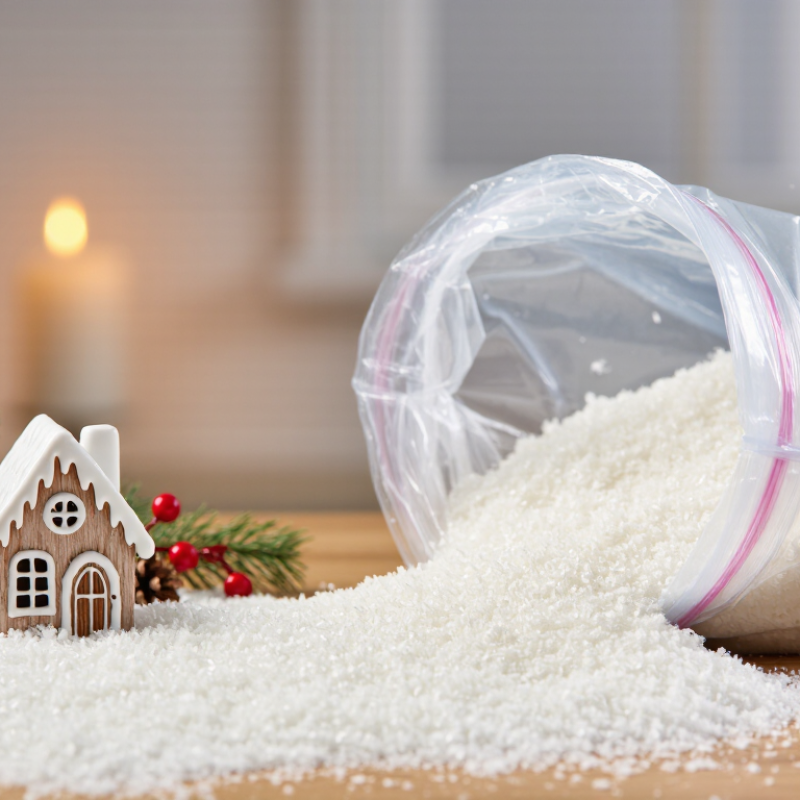
Why Do Buyers Choose Fake Snow Bags?

What Fake Snow Bags Contain and How They Create a Snow-Like Effect

Fake snow bags commonly contain a dry, absorbent material, such as cellulose fibers or a superabsorbent polymer. The exact ingredients vary, so check the package label rather than assuming every product behaves the same way. Add water as directed, and the material swells into soft, pale flakes or clumps. A small amount can look surprisingly fluffy.

The effect comes from the expanded material scattering light and holding moisture, which gives it a snowy appearance. In a shallow tray, it can form a soft layer around miniature trees or toy houses. It feels cool and damp, but it is not real snow. Not quite the same. Some mixtures become sticky or compact after handling, and the texture may change as they dry. That imperfect quality is worth noting when planning a display. Use the product as directed, avoid ingesting it, and keep loose powder away from eyes and pets. Follow the label for cleanup and disposal.

Why Buyers Choose Fake Snow Bags

How a common fake-snow ingredient creates a snow-like effect

What’s inside: Many instant fake-snow products use a superabsorbent polymer such as sodium polyacrylate. When water is added, the polymer swells into a soft, snow-like gel. Some sodium polyacrylate can absorb roughly 300 times its dry mass in deionized water; actual absorption varies with the polymer, water quality, and product formulation. This illustrates absorbency, not the ingredient proportions in a snow bag.

Where Buyers Use Fake Snow Bags

Fake snow bags are often used where real snowfall would be difficult to manage. A shop window can gain a winter look without cold air or melting slush. A small handful around a tabletop village adds texture beneath miniature houses. For a school play, lightweight flakes can suggest a snowy path across a stage. The effect is simple. But products differ: some contain loose decorative pieces, while others expand when mixed with water. Check the package directions before choosing or preparing one.

Photo studios use fake snow to create a seasonal background that stays in place between shots. Event planners may scatter it around a display, then remove it after guests leave. Test a small area first, especially on painted floors, fabric, or polished surfaces. Some materials can leave residue or become slippery when damp. Keep the setup away from fans and busy walkways, where flakes may drift or get tracked around. It can look charming, though a perfectly even layer sometimes feels less convincing than a few natural-looking patches. Cleanup is part of the scene, too.

Why Buyers Choose Artificial Snow Instead of Natural Snow

Buyers choose artificial snow because winter displays rarely follow the weather. A shop window, photo set, or indoor event needs a predictable look on a fixed date. Natural snow can melt, arrive late, or never appear. The IPCC’s Sixth Assessment Report estimates that Northern Hemisphere spring snow cover declined by about 1.9% per decade from 1967 to 2018. That figure does not measure holiday-display demand, but it shows why natural snow is an unreliable planning material in many settings.

Consistency matters.

Bagged artificial snow also gives buyers control over coverage. A thin layer can sit across a tabletop; larger flakes can frame a doorway or fill a photo scene. It stores between events, and teams can apply it without waiting for a cold forecast. That is practical.

Still, it is not snow. Under warm lights, some products look too uniform, and loose particles may scatter during setup. Buyers should check the product’s material details, cleanup instructions, and safety documentation before use.

The WMO’s State of the Global Climate 2023 report recorded 2023 as the warmest year in its observational record, adding context to shifting seasonal expectations. But climate data alone cannot explain every purchase. Budget, venue conditions, and the desired visual effect matter too.

How Convenience, Cost, and Storage Influence Buying Decisions

Fake snow bags appeal to buyers who want a winter display without hauling, shaping, or cleaning real snow. A sealed bag fits on a closet shelf, then opens near a mantel, shop window, or party table. That convenience matters when setup time is short. Still, loose flakes can scatter, so a tray or cloth underneath saves cleanup.

Price is another practical factor. Buyers compare coverage, not just the sticker price; a small pack may need several refills. Check the product instructions for suggested coverage and whether the material is reusable. Cheap can be awkward. Some displays need a denser layer than expected, and buying extra at the last minute can erase the savings.

Storage also shapes the decision. Follow drying instructions for any damp material. Store it sealed in a clean, dry container, away from heat and curious pets. Bag labels vary, so check handling and disposal guidance rather than assuming every product works the same way. A clear label helps buyers decide whether leftovers belong on next year’s shelf.

What Buyers Consider When Selecting Fake Snow Bags

Buyers choosing fake snow bags often look beyond the product photo. Texture matters: fine flakes may suit tabletop scenes, while larger pieces can show up better around a display. Check whether the snow is loose, clumped, or prone to sticking after storage. A small sample can reveal more than a polished image. It can also expose a mismatch.

Packaging and product details deserve equal attention. Clear instructions should explain the intended use, storage conditions, and cleanup method. Buyers may also ask for material information and relevant safety documentation, especially when the snow will be used around children, pets, or food displays. Do not assume every “non-toxic” claim covers every situation. Compare bag sizes, too; a low price may mean more waste if the quantity is poorly matched to the project. I once overlooked that detail. It was not ideal.

Tips: Open a sample over a clean tray and check its texture, color, and dust. Store the bag in a dry, sealed place, then inspect it again before use. If details are vague, ask questions before ordering.

Why Do Buyers Choose Fake Snow Bags? - What Buyers Consider When Selecting Fake Snow Bags

Buyer Consideration Why It Matters What to Check Typical Trade-off
Intended use Different products are made for different effects, such as tabletop displays, holiday scenes, window dressing, or photography backdrops. Confirm whether the contents are loose flakes, a decorative blanket, or a product that expands when mixed with water. A product suited to one display style may not create the look or handling experience needed for another.
Appearance and texture Color, flake size, sheen, and texture affect how convincing the display looks under the intended lighting. Review product images and descriptions for color, finish, particle size, and whether the material is loose or fabric-like. A bright or reflective finish can stand out in photos but may look less natural in some settings.
Coverage and quantity The amount needed depends on the display area, desired depth, and product form; package weight alone does not show how much area it will cover. Check the stated coverage, finished dimensions, or preparation instructions, and compare these with the area to be decorated. A thicker-looking display usually requires more material than a light dusting.
Setup and handling Some products are ready to arrange, while certain instant-snow products require water and time to expand. Read the instructions for preparation, expansion, placement, and any recommended protective measures. Products requiring preparation can create a fuller effect but need extra setup and space.
Cleanup and reuse Loose decorative material may scatter, while blanket-style products can often be gathered and stored more easily. Check cleanup guidance, storage instructions, and whether the product is described as reusable. Follow its disposal directions. Loose materials can create a more scattered snow effect but may take longer to collect.
Safety and suitability The intended setting matters, especially around children, pets, food, heat sources, or sensitive surfaces. Read the label and safety instructions. Do not assume decorative snow is edible, suitable for pets, or safe for every surface. A product suitable for a display may still require restricted access or careful placement.
Indoor or outdoor use Moisture, wind, and temperature can affect how decorative materials look and stay in place. Look for explicit indoor or outdoor use guidance rather than assuming a product works in both environments. Outdoor displays may need more secure placement and materials intended for the conditions.
Packaging and storage Packaging affects how easily the contents can be transported, stored, and portioned for a display. Check the package size, closure type, storage conditions, and whether the contents need to be kept dry. Larger packs can suit broad displays but may require more storage space between uses.
Overall value A useful comparison considers usable coverage, preparation needs, cleanup, and suitability—not just the listed package price. Compare products with similar formats and check the stated coverage and instructions before deciding. A lower-priced pack may not offer better value if it covers less area or requires more preparation.

FAQS

What are fake snow bags commonly used for?

They create winter scenes in shop windows, tabletop villages, school plays, and photo studios. A handful beneath miniature houses adds texture without cold air or melting slush.

Do all fake snow products work the same way?

No. Some contain loose decorative flakes, while others expand when mixed with water. Read the package directions before opening or preparing the material.

Why choose artificial snow instead of natural snow?

Indoor displays need predictable timing and appearance. Natural snow may melt, arrive late, or not fall at all. Planning is easier this way.

How can I keep a display tidy?

Test a small patch on painted floors, fabric, or polished surfaces. Put a tray or cloth under loose flakes, and keep them away from fans and busy walkways. Cleanup matters.

Can fake snow make floors slippery?

Some materials may leave residue or become slippery when damp. Keep damp products away from walking areas, and follow their handling instructions. Not always obvious.

How much fake snow should I buy?

Compare expected coverage, not just pack price. A small bag may need several refills for a doorway or photo backdrop. Extra bags can cost more than expected.

How should I store leftover fake snow?

Follow drying instructions for damp material, then seal it in a clean, dry container away from heat and pets. Check the label before storing or disposing of leftovers. Labels vary.

How can I make an artificial snow scene look more natural?

Try uneven patches instead of a perfectly smooth layer. Under warm lights, flakes may look too uniform. A little irregularity helps, though it can be hard to judge.

Conclusion

Fake Snow Bags contain lightweight materials that expand or fluff up when prepared, creating a soft, snow-like effect for seasonal displays and creative projects. Buyers use them to decorate homes, shop windows, events, photo settings, and craft scenes. Their appeal comes from offering a wintry look without depending on cold weather, snowfall, or outdoor conditions, making them useful in many places and throughout the year.

Convenience, cost, and storage also shape buying decisions. Artificial snow can be kept on hand and used when needed, while unopened or reusable supplies may be easier to store than natural snow is to obtain and manage. When selecting Fake Snow Bags, buyers often consider the amount provided, the appearance and texture, ease of preparation and cleanup, storage requirements, and suitability for the intended setting. These practical factors help them choose an option that fits both their project and budget.


Liam

Liam

Liam is a dedicated marketing professional with a profound expertise in the industry, where he excels at highlighting the unique advantages of our core products. With a keen understanding of market trends and consumer needs, Liam frequently updates our company’s professional blog, providing......